Aamir Khan to return to direction

His 2007 film 'Taare Zameen Par' received accolades from both critics and viewers. The 47-year-old actor had also worked as an assistant director for his filmmaker-uncle Nasir Hussain's movies like 'Manzil Manzil' (1984) and 'Zabardast' (1985).
“He has a story and chosen,hope to direct. But right now he has responsibility as an actor, plus (TV show) 'Satyamev Jayate' season 2,”
“The script is written by someone else.Amir told the writer it (direction) will take time. He don't know when he would direct next. As he have 'Peekay', 'Dhoom 3' and 'Satyameva Jayaate 2' in hand.
Aamir is fascinated with 'Mahabharat' and will love to be a part of the epic's presentation on big screen one day.
“It is a desire. The project is huge. It is a dream project for him. But if decide today making it, I will have to give 20 years to it. This is why I am scared, if I say yes and decide to make it, five years will go only in research and then to execute it....The material is very exciting for me,” he said.
Aamir also cleared the air on reports of creative differences between him and director of his upcoming movie 'Talaash' Reema Kagti.
“As far as Reema is concerned, these rumours are not true. Lots of times they are untrue. Like 'Lagaan', this time around also there was something about me not being happy with the film. If I go around explaining every rumour I will have to stop working. I have to let go and decide that ultimately the film will speak for itself,” he sa
“It's been wonderful working with Reema. She is in control of the material and confident about what she wants. She is very clear about how she will get it. She doesn't compromise,” Aamir said.
“I felt comfortable and safe in her hands. At a number of places, she was able to point out layers in my character and scenes which I had not thought about. I was quite amazed by her perceptiveness and understanding of the moment.”
Besides Aamir, 'Talaash', which releases on November 30, stars Kareena Kapoor and Rani Mukherjee in the lead.
“I don't think I have ever done a film where I haven't given my opinion. Sometimes it is taken and sometimes it is not. But I trust my directors. When a director is working, everyone gives opinions,” said Aamir.
“When I was working on 'Taare Zameen Par', everyone gave me suggestions. That didn't make me less of a director. It's up to me to accept them or not,” he said.
Life of Pi is Ang Lee's best till date

Life of Pi is narrated in flashback by the older Pi (Irrfan Khan) to a reporter (Rafe Spall), who is in search for an interesting story – “A story that will make me believe in God,” he says. Pi recounts the incredible experiences he went through during his 200-day ordeal on sea with a tiger. They have narrated how different religions influenced him as an impressionable child and how his faith had been questioned when he was stranded in the middle of the ocean.

Life of Pi is a film difficult to make. Most of the story takes place on a lifeboat, in the middle of the Pacific Ocean. The shipwrecked hero (Suraj Sharma) doesn’t have a human soul to talk to for several days, except Richard Parker, a full-grown 450 pound Bengal tiger. This is one glaring problem faced by any aspiring filmmaker – How can they create a mighty tiger and make it look real? Well, it's amazing what they can do with special effects these days. Richard Parker is such a fabulous and fully realized creation, perhaps nothing seems impossible to film now.
Claudio Miranda's luminous, glossy, color-saturated cinematography gives the movie a picture book quality which impresses to say the least. Especially the night portions at sea, when the water reflects the deep glimmering stars. Or the cameo made by the fluorescent painted whale that makes the scene look so magical. You almost start to believe that Pi, even while he’s stranded in the middle of the ocean, is living a better life than yours.
Ang Lee’s film is stronger as a visual experience than an emotional one. Right from the opening credits to the last scene, each and every frame is like a painting. There are scenes which do not help the story move forward but they determine Pi’s existence and his journey towards finding the actual meaning of life. However, the ones who’ve read Martel’s book will understand the visual metaphors of the film, much better than those who haven’t. Simply because this film is like a spiritual experience, you’d understand only if you connect.

For instance the film is about the desire to survive and will to live. Pi believes in three different religions and always performs their rituals. But when he’s on the life boat in the open sea, he’s unable to perform those rituals. He can’t pray towards Mecca and he eats fish in order to survive, even though he’s vegetarian. In a truly terrific scene between him and Richard Parker, Pi exclaims how the need for survival powers over any conviction.
The problem isn’t in the execution. Scenes with the tiger may be examples of movie magic but it doesn’t give enough meat for the audience to understand and accept what’s been thrown at them. The problem many would face is, ‘It’s all beautiful but what does it all mean?’
As for the cast, Young Suraj Sharma anchors Life of Pi with a confident performance. Irrfan Khan as the older Pi brings a lot of meat into the character. Watch out for the scene when he remembers Richard Parker while narrating his story to the reporter. Tabu and Adil Hussain as Pi’s parents are cast well.

The more you say about Ang Lee, the less it feels. He’s showed us the magic that can be created on-screen with 3D and CGI. He’s made us believe that one just needs to have a vivid imagination and courage to back it with conviction.
Life of Pi is a fitting adaptation of Martel’s book. There have been umpteen arguments for how movie adaptations of novels ought to work. But ultimately, the movie has to stand on its own. If you haven’t read the book, the visuals of this film will entice you like never before. Perhaps the central message of Life of Pi works better on the printed page rather than moving images. But if you have read the book, then this film is an alternate reality; magnificent and one of its kind, waiting to be explored.
India Unit of Wal-Mart Suspends Employees

It is the latest in a series of setbacks for the retail giant’s international operations and comes at a particularly sensitive time here because Indian policy makers recently allowed foreign retailers like Wal-Mart to open stores in the country. The investigation seems to have emboldened opposition lawmakers in New Delhi who are trying to overturn the government’s decision on foreign retailers.
In a statement, Bharti Walmart, a 50-50 joint venture between the Indian conglomerate Bharti Enterprises and Wal-Mart,“a few associates” to ensure “a complete and thorough investigation.” The Economic Times, an English-language daily, reported that the suspended employees included its chief financial officer and its legal team, but the company would not confirm that.
This month, Wal-Mart disclosed that it had expanded a bribery investigation that was initially focused on Mexico to India, China and Brazil. In April, The New York Times reported that executives at the company’s Arkansas headquarters had suppressed an internal investigation that found credible evidence that its Mexican subsidiary had paid bribes in an effort to open more stores in that country.
Bharti Walmart operates 18 wholesale stores in India that are allowed to sell goods to other businesses like retailers, hotels and restaurants. Most of its stores are in northern India, but it had planned to expand in the coming months in the south and west. Those plans have now been delayed, but the company said in a statement that “we remain excited about the opportunity to grow our business in one of the world’s most vibrant economies.”
Wal-Mart’s Indian joint venture also supplies about 200 supermarkets that are wholly owned by its partner’s Bharti Retail, and which operate under the brand Easyday.
In a separate inquiry, Indian authorities are looking into whether Wal-Mart violated foreign investment rules by giving Bharti Retail an interest-free loan of $100 million that would later convert into a controlling stake in that company. Both companies have maintained that they did not violate Indian investment regulations.
In September, Indian policy makers said foreign companies like Wal-Mart could directly enter the retail business with a local partner as long as they did not own more than 51 percent of the business.
The long-delayed move came with significant political opposition — one important regional political party withdrew its support from the governing coalition in New Delhi, which is led by the Indian National Congress Party, as a result. Days after that change, Wal-Mart officials said they would open retail stores in the country in as little as 18 months.
On Thursday and Friday, opposition lawmakers disrupted the first days of the winter session of Parliament, demanding that the government allow a debate and vote on the change in its retail policy. The demand was turned down.
The latest developments in Wal-Mart’s internal investigation could strengthen the opposition’s hand because Indian policy makers are already struggling to recover from accusations of corruption involving industries like telecommunications, energy and mining.
“It showcases that these are Wal-Mart’s practices worldwide,” Prakash Javadekar, a lawmaker for the country’s largest opposition party, the Bharatiya Janata Party, said in a telephone interview. “This will sharpen the debate.”
Though it is unclear exactly what Wal-Mart’s investigators are examining, Indian analysts say it is common to encounter corruption in industries like retailing that are governed by numerous overlapping federal, state and local rules.
In some Indian states, retail chains have to secure 50 to 60 regulatory approvals before they can open a store, a process that can take months and provides numerous opportunities for bribery, said Arvind Singhal, chairman of Technopak Advisors, a consulting firm that specializes in the retail business. Often the regulatory requirements are holdovers from a distant era. Stores that want to sell thermometers, for instance, usually have to obtain approval from a department in charge of weights and measures.
“To me, much beyond the Wal-Mart example, I sincerely hope that there is a serious debate about why is it so difficult to do business in India,” he said. “All of these conditions have only made India a poorer country.”
War looms once again in Congo

The M23 was formed out of a mutiny from the Congolese army in April by several hundred soldiers from a former rebel army that had signed a peace deal with the government on March 23, 2009. They are led by Gen. Bosco Ntaganda, a former high-ranking army officer who has been indicted by the International Criminal Court on seven counts of crimes against humanity. The rebels have used and recruited child soldiers by the hundreds, according to the United Nations. By taking Goma, the rebels have raised the prospect of a destabilizing return to a regional war.
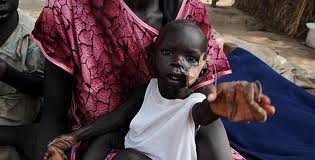
In the broadest sense, what’s unfolding is a result of the vacuum created by Congo’s weakness as a state. As the author and Congo analyst Jason Stearns has pointed out, the government in Kinshasa under President Joseph Kabila can’t impose rule of law or its military writ in the region, leading armed groups to fill the space. The International Crisis Group described the latest rebellion as, in part, the result of failure to implement earlier accords, failure to reform the army and failure to start a serious political dialogue. The presence of a 19,000-strong U.N. peacekeeping force has done little to halt the conflict.
Rwanda, which borders Congo to the east, sees this mineral-rich swath of Congo as a sphere of influence. Rwanda’s role in supplying arms and support to the M23 rebels cannot be underestimated, despite denials. A U.N. report just published concludes that Rwanda has provided “direct military support” to the rebels, including “arms, ammunition, intelligence and political advice.” Uganda is also believed to be aiding the rebels.
Rwanda and Uganda should stop their meddling, and the United States and Britain must turn up the pressure on Rwanda to halt support for the rebels. That will take more than quiet diplomacy. A U.N. Security Council resolution approved Tuesday called for sanctions against the rebel leaders but stopped short of naming Rwanda. All sides need to recognize they are sliding once again toward the killing fields and to come to their senses before the bloody wars of the past are repeated.
Egypt unrest: Anti-Mursi protests intensify

Opponents of Egyptian
President Mohammed Mursi have set up camp in central Cairo to protest
against a new decree granting him sweeping powers.
A defiant Mr Mursi defended the move, saying he was leading Egypt on a path to "freedom and democracy".
The Obama administration has voiced concern about developments.Tear gas in Tahrir
Overnight, some 20 white tents were pitched in the middle of Cairo's totemic Tahrir Square, where Egyptians celebrated the ousting of President Hosni Mubarak last year.
Protest organisers said more than 20 different groups had joined the week-long sit-in against Mr Mursi's reforms. Numbers of protesters have ranged from a few hundred to a few thousand.Organisers have called for a huge protest on Tuesday.

22 November declaration
- All investigations into the killing of protesters or the use of violence against them will be re-conducted; trials of those accused will be re-held
- All constitutional declarations, laws and decrees made since Mr Mursi assumed power cannot be appealed or cancelled by any individual, or political or governmental body
- The public prosecutor will be appointed by the president for a fixed term of four years, and must be aged at least 40
- The constituent assembly's timeline for drafting the new constitution has been extended by two months
- No judicial authority can dissolve the constituent assembly or the upper house of parliament (Shura Council)
- The president is authorised to take any measures he sees fit in order to preserve the revolution, to preserve national unity or to safeguard national security
- Egypt: Who holds the power?
They say the new president is becoming as much of a dictator as long-time ruler Hosni Mubarak.
The protesters have two demands: to reverse the president's
constitutional declaration, and to dissolve the constituent assembly
that is currently drafting Egypt's new constitution.Separately another set of anti-Mursi protesters clashed with police near the interior ministry off Tahrir Square. Police fired tear gas and demonstrators threw petrol bombs. Chants of "Mursi is Mubarak... revolution everywhere" rang out.
Almost 100 people were injured in violence as offices of the president's Muslim Brotherhood party were reportedly attacked in the cities, Suez and Ismailia, while clashes between rival demonstrations took place in Alexandria.
Defending his decision at a rally at Cairo's, Mr Mursi was the guardian of political, economic and social stability, but that he wanted to see a "genuine opposition, a strong opposition".
Key opposition figures have accused the president of "monopolising all three branches of government" and overseeing "the total execution of the independence of the judiciary".
US state department, the decree had "raised concerns" in the international community.
Egypt's revolution had aimed "to ensure that power would not be overly concentrated in the hands of any one person or institution".The US wanted democratic dialogue within Egypt to solve constitutional issues.
The rapid turn of events may have caught Washington by surprise.
Secretary of State Hillary Clinton met Mr Mursi in Cairo and praised him for his efforts in brokering the ceasefire in Gaza.
Constitution rewrite, The new decree bans challenges to Mr Mursi's laws and decisions, and says no court can dissolve the constituent assembly, which is drawing up a new constitution.
It also opens the way for a retrial of people convicted of killings during Egypt's 2011 uprising which toppled Mubarak.
The declaration also gives the 100-member constituent assembly two additional months to draft a new constitution, to replace the one suspended after Mubarak was overthrown.
The rewrite of the constitution, which was meant to be finished by December, has been plagued by legal complaints questioning the make-up of the constituent assembly. Once completed, the document is due to be put to a referendum. If it is approved, legislative elections will be held two months later.
A fat child is not a healthy child

The theme of this year’s World Heart Day, ‘Cardiovascular disease prevention among women and children,’ indicates a paradigm shift in the focus from adults to children. This is a result of the global realisation that the war against the leading killer, atherosclerosis and coronary artery disease, can be won only if remedial measures are initiated from childhood.
Obesity is a result of energy intake exceeding energy expenditure, leading to excessive fat deposition in the body. The excess fat and cholesterol commonly get deposited inside the arteries, resulting in a hardening of the arterial vessel wall. This is called atherosclerosis. The fat deposits inside the vessel are called plaques and the increase in size over a period of time, causing a progressive blockage to blood flow. When the blockage is significant, it will lead to a heart attack.
Recent data from the Centers for Disease Control and Prevention in the United States of America have established that 35.7% of adults and 16.9% of children are obese. Other studies show that at least 70% of these obese adolescents grow up to be obese adults. Once obesity is established in adulthood, it will be extremely difficult to reverse it. This is the rationale for shifting the focus on controlling obesity in children as well as inculcating lifestyle modifications, which in turn will produce a generation of adults free of the early onset of cardiovascular disease and contribute to a healthy society.
Childhood obesity is caused by multiple factors. The predominant cause is an unhealthy dietary habit compounded by a sedentary lifestyle. Other causes include intake of medications such as steroids, some medical conditions such as hypothyroidism and genetic factors. It has been found that if one parent is obese, the chances of obesity in the child are 50%, whereas if both parents are obese, it is nearly 80%. Children whose family members are overweight or have hypercholesterolaemia or a history of cardiovascular disease under 55 years are considered high risk for the early onset of coronary artery disease and should be screened periodically beyond two years of age with a fasting lipid profile.
Obesity is a result of energy intake exceeding energy expenditure, leading to excessive fat deposition in the body. The excess fat and cholesterol commonly get deposited inside the arteries, resulting in a hardening of the arterial vessel wall. This is called atherosclerosis. The fat deposits inside the vessel are called plaques and the increase in size over a period of time, causing a progressive blockage to blood flow. When the blockage is significant, it will lead to a heart attack.
Recent data from the Centers for Disease Control and Prevention in the United States of America have established that 35.7% of adults and 16.9% of children are obese. Other studies show that at least 70% of these obese adolescents grow up to be obese adults. Once obesity is established in adulthood, it will be extremely difficult to reverse it. This is the rationale for shifting the focus on controlling obesity in children as well as inculcating lifestyle modifications, which in turn will produce a generation of adults free of the early onset of cardiovascular disease and contribute to a healthy society.
Childhood obesity is caused by multiple factors. The predominant cause is an unhealthy dietary habit compounded by a sedentary lifestyle. Other causes include intake of medications such as steroids, some medical conditions such as hypothyroidism and genetic factors. It has been found that if one parent is obese, the chances of obesity in the child are 50%, whereas if both parents are obese, it is nearly 80%. Children whose family members are overweight or have hypercholesterolaemia or a history of cardiovascular disease under 55 years are considered high risk for the early onset of coronary artery disease and should be screened periodically beyond two years of age with a fasting lipid profile.
The lipid profile values for children are:
Total Cholesterol >170mg/dl (Borderline), >200mg/dl (Elevated)
LDL >110 mg/dl (Borderline), >130 mg/dl (Elevated)
HDL <35 mg/d
TGL >150 mg/dl (Elevated)
If the average results of three lipid profile results are above the cut-off values, then intervention will be required in the form of dietary and lifestyle modifications. Medications to reduce cholesterol is indicated when the LDL exceeds 160mg/dl with associated high risks or when it is > 190mg/dl.
In the absence of a medical cause, childhood obesity can be managed only by a strict diet and exercise regimen. This includes avoiding fatty foods and snacks, binge eating, watching television while eating; eating slowly, increasing outdoor physical activities and, if necessary, taking the help of a dietician or psychiatric counsellor.
Total Cholesterol >170mg/dl (Borderline), >200mg/dl (Elevated)
LDL >110 mg/dl (Borderline), >130 mg/dl (Elevated)
HDL <35 mg/d
TGL >150 mg/dl (Elevated)
If the average results of three lipid profile results are above the cut-off values, then intervention will be required in the form of dietary and lifestyle modifications. Medications to reduce cholesterol is indicated when the LDL exceeds 160mg/dl with associated high risks or when it is > 190mg/dl.
In the absence of a medical cause, childhood obesity can be managed only by a strict diet and exercise regimen. This includes avoiding fatty foods and snacks, binge eating, watching television while eating; eating slowly, increasing outdoor physical activities and, if necessary, taking the help of a dietician or psychiatric counsellor.
Run for your life

We’re living in a ready-get-set-go era. It is not surprising that running as a sport has become popular. Although our ancestors took to their heels whenever they had to resort to the flight response (as opposed to fight), civilisation and the sedentary lifestyle of subsequent periods slowed us down. Being acclimatised to speed of a different kind today, even the exercise regimen that some of us choose has picked up momentum and reflects the times that we live in
Why are people running?
The many running clubs that have sprouted — from Runners for Life to Nike Run Club, Chennai Runners, Dream Runners, Delhi Runners, Hash House Harriers (who define themselves as a drinking club with a running problem), Runner Girls International — organise regular events, keep interest levels high and facilitate sharing of notes. This has further peaked with marathons in various cities and corporate-led events, like Citizen’s Run, to raise funds for social causes.
Given all the endorphins and feel-good hormones that are released during a good exercise regimen, one tends to agree with actor, activist and entrepreneur Gul Panag who equates running to happiness. With 16 half-marathons behind her in the 18 years since she began running, her initial reluctance is now a thing of the past. “Within the first six months I was running two miles. I felt better and was a happier kid. I fared better in physical fitness tests and beat most of the boys hollow, except two: a national basketball player and a national swimmer,”
Why are people running?
The many running clubs that have sprouted — from Runners for Life to Nike Run Club, Chennai Runners, Dream Runners, Delhi Runners, Hash House Harriers (who define themselves as a drinking club with a running problem), Runner Girls International — organise regular events, keep interest levels high and facilitate sharing of notes. This has further peaked with marathons in various cities and corporate-led events, like Citizen’s Run, to raise funds for social causes.
Given all the endorphins and feel-good hormones that are released during a good exercise regimen, one tends to agree with actor, activist and entrepreneur Gul Panag who equates running to happiness. With 16 half-marathons behind her in the 18 years since she began running, her initial reluctance is now a thing of the past. “Within the first six months I was running two miles. I felt better and was a happier kid. I fared better in physical fitness tests and beat most of the boys hollow, except two: a national basketball player and a national swimmer,”
Industrialist Arun Krishnan — who has run two major marathons (Chicago and Berlin) and is gearing up for three others (London, New York and Boston) — says, “Running is the best stress buster ever. Initially one wakes up with great reluctance and trudges grudgingly to the venue. But after the first few strides, the feeling is one of sheer exhilaration. A good run has a calming effect, which lasts for much of the day.” He should know; he has been running for 35 years now.
For Gayathre Rajam, yoga teacher, tri-athlete and entrepreneur, running with music “is like meditation. It brings a sense of inner peace. To me, running is tougher than cycling or swimming. It helps improve my fitness, maintain my weight and keeps me in a good mood.”
But there are negatives too. Dr. Nitiraj Oberoi, Consultant, Orthopaedics and Sports Surgery, Fortis Hospitals, New Delhi, says, “Runners suffer from stress fractures of the foot, shins, knee, hip and groin besides foot tendonitis, bursitis of the knee and pelvis. This causes difficulty in walking and sitting. Also there is the likelihood of aggravating existing lumbar disc problems.” Dr. Kannan Pugazhendi adds, “Running injuries are not due to a single event and require many days of repeated stress.”
Most running injuries happen due to poor conditioning, over-ambitious running schedules, bad foot positioning during impact, bad or worn out shoes and hard running surfaces. Running shoes need proper heel counter support and pronation prevention. Also one should not run on concrete surfaces. Running on a treadmill is not advised as there is a higher incidence of stress injuries.
Though proper running shoes are important some people have opted to run barefoot. Dr. Gladson Johnson, Bangalore-based sports physiotherapist who has run full marathons on bare feet, says, “You cannot make the transition overnight but have to train for at least 18-20 months as the mechanics of bare feet running are different.
For Gayathre Rajam, yoga teacher, tri-athlete and entrepreneur, running with music “is like meditation. It brings a sense of inner peace. To me, running is tougher than cycling or swimming. It helps improve my fitness, maintain my weight and keeps me in a good mood.”
But there are negatives too. Dr. Nitiraj Oberoi, Consultant, Orthopaedics and Sports Surgery, Fortis Hospitals, New Delhi, says, “Runners suffer from stress fractures of the foot, shins, knee, hip and groin besides foot tendonitis, bursitis of the knee and pelvis. This causes difficulty in walking and sitting. Also there is the likelihood of aggravating existing lumbar disc problems.” Dr. Kannan Pugazhendi adds, “Running injuries are not due to a single event and require many days of repeated stress.”
Most running injuries happen due to poor conditioning, over-ambitious running schedules, bad foot positioning during impact, bad or worn out shoes and hard running surfaces. Running shoes need proper heel counter support and pronation prevention. Also one should not run on concrete surfaces. Running on a treadmill is not advised as there is a higher incidence of stress injuries.
Though proper running shoes are important some people have opted to run barefoot. Dr. Gladson Johnson, Bangalore-based sports physiotherapist who has run full marathons on bare feet, says, “You cannot make the transition overnight but have to train for at least 18-20 months as the mechanics of bare feet running are different.
First practice barefoot walking, then barefoot jogging on grass, mud and hard terrains and get a feel of different surfaces. If not, there is a chance of serious injury to the ankle, foot, knee, lower back and neck. The older one is, the longer it takes to adjust. Intensive stretches (of the toes, ankles, arches, plantar fascia or connective tissue on the sole of the foot, calf muscles, shin muscles), strengthening of the core muscles around the waist will help develop a good foot. The bottom line is that the end technique of running is highly individualised since different people have different types of feet: flat feet, arch feet, pronated feet and bird feet.”
Overcoming injuries
Yoga is Gayathre’s secret. “It helps me stay injury free.” Arun Krishnan points out, “With proper training one can minimise injuries but not avoid them altogether. The probability of injury increases with age, hence it is important to pay heed to and attend to niggles before they develop into injuries.” RICE (Rest, Ice, Compression and Elevation) is his mantra. “After every run I strap cold packs on my knees and other joints.”
According to Dr. Oberoi, rest is the best treatment followed by improved technique. “Physiotherapy works for tendinitis and bursitis only. Persistent pain that does not abate after 4-5 days rest and returns after every run means it is time to see the doctor. Dr. Pughazendi also warns, “Any form of chest discomfort or pain, numbness in the little finger or pain in the left arm could point to cardiac issues.”
For those tempted to sign up for a marathon, Dr. Oberoi has some advice: One needs to prepare for over 10 months. If not a marathon, try brisk walking and power walking.” Adds Dr. Johnson, “Long distance running is a mind-body game. The tougher you are, the better your chances of reaching the finish line.”
And for those taking baby steps, Gayathre Rajam says, “Start running slowly. Don’t attempt to conquer mountains on day one. Walk 10 steps and run 10 steps. Slowly increase the steps you run. Before you know it you will be able to run 10 km non-stop.”
Simple tips
Have a proper warm up and cool down routine.
Running shoes should be changed once in 6-8 months depending on mileage. Do not use running shoes as casual wear.
Do not increase running distance suddenly. If doing so give the body time to recover.
A proper cool down, aqua therapy and ice rub on sore areas immediately after the run are essential.
Have a snack, if not a meal, within one hour of the run.
Replace fluids during the run. Check weight before and after the run to how much fluid to replace (1kg = 1litre).
Do not ignore pain. Listen to what your body’s signals.
The right technique
Use the full feet to run, making contact with the heel and rolling it forward to take off from the ball of the toes. The contact with the ground should produce minimum sound.
Running on the toes increases the impact loading and is essential only for sprinting.
Unnecessary movements of the neck and trunk should be avoided and shoulder movement should be minimal.
Proper warm up, stretching, avoiding sudden progression of distance and adequate recovery time are all crucial to prevent injuries.
Overcoming injuries
Yoga is Gayathre’s secret. “It helps me stay injury free.” Arun Krishnan points out, “With proper training one can minimise injuries but not avoid them altogether. The probability of injury increases with age, hence it is important to pay heed to and attend to niggles before they develop into injuries.” RICE (Rest, Ice, Compression and Elevation) is his mantra. “After every run I strap cold packs on my knees and other joints.”
According to Dr. Oberoi, rest is the best treatment followed by improved technique. “Physiotherapy works for tendinitis and bursitis only. Persistent pain that does not abate after 4-5 days rest and returns after every run means it is time to see the doctor. Dr. Pughazendi also warns, “Any form of chest discomfort or pain, numbness in the little finger or pain in the left arm could point to cardiac issues.”
For those tempted to sign up for a marathon, Dr. Oberoi has some advice: One needs to prepare for over 10 months. If not a marathon, try brisk walking and power walking.” Adds Dr. Johnson, “Long distance running is a mind-body game. The tougher you are, the better your chances of reaching the finish line.”
And for those taking baby steps, Gayathre Rajam says, “Start running slowly. Don’t attempt to conquer mountains on day one. Walk 10 steps and run 10 steps. Slowly increase the steps you run. Before you know it you will be able to run 10 km non-stop.”
Simple tips
Have a proper warm up and cool down routine.
Running shoes should be changed once in 6-8 months depending on mileage. Do not use running shoes as casual wear.
Do not increase running distance suddenly. If doing so give the body time to recover.
A proper cool down, aqua therapy and ice rub on sore areas immediately after the run are essential.
Have a snack, if not a meal, within one hour of the run.
Replace fluids during the run. Check weight before and after the run to how much fluid to replace (1kg = 1litre).
Do not ignore pain. Listen to what your body’s signals.
The right technique
Use the full feet to run, making contact with the heel and rolling it forward to take off from the ball of the toes. The contact with the ground should produce minimum sound.
Running on the toes increases the impact loading and is essential only for sprinting.
Unnecessary movements of the neck and trunk should be avoided and shoulder movement should be minimal.
Proper warm up, stretching, avoiding sudden progression of distance and adequate recovery time are all crucial to prevent injuries.
Subscribe to:
Posts (Atom)